
Uncategorized
Insulated Garden Room Costs and Permanent Homes
Aug
A low headline figure can be appealing, but insulated garden room costs are only useful when you know exactly what is included. For a homeowner considering a permanent 45 m² home for family living or qualifying rental use, the meaningful figure is the whole-project cost: foundations, compliant construction, heating, ventilation, internal finishes and service connections.
A permanent small house is a long-term addition to a property, designed for comfortable occupation through every season. That changes both the specification required and the questions worth asking before you compare quotations.
Insulated garden room costs: look beyond the starting price
The advertised starting price for an insulated structure may cover the shell alone, or it may include a much more complete specification. Without a clear inclusions schedule, two figures can look comparable while representing very different homes.
For permanent residential use, insulation is not simply material placed in the walls. It works alongside the floor, roof, windows, airtightness, ventilation and heating system. A weak point in any one of these areas can affect comfort, condensation risk and the energy needed to maintain a pleasant indoor temperature.
A proper comparison should therefore begin with the intended use. A space used occasionally has different demands from a home intended for an adult child, an older parent or a qualifying resident. Year-round occupation calls for durable construction, safe services, practical storage, a fitted kitchen and bathroom, and a design that supports everyday privacy and comfort.
What should be included in the cost of a permanent 45 m² home?
A complete project budget normally has several parts. The building itself is one part, but site preparation and the route to a finished, usable home matter just as much.
The building structure and thermal envelope
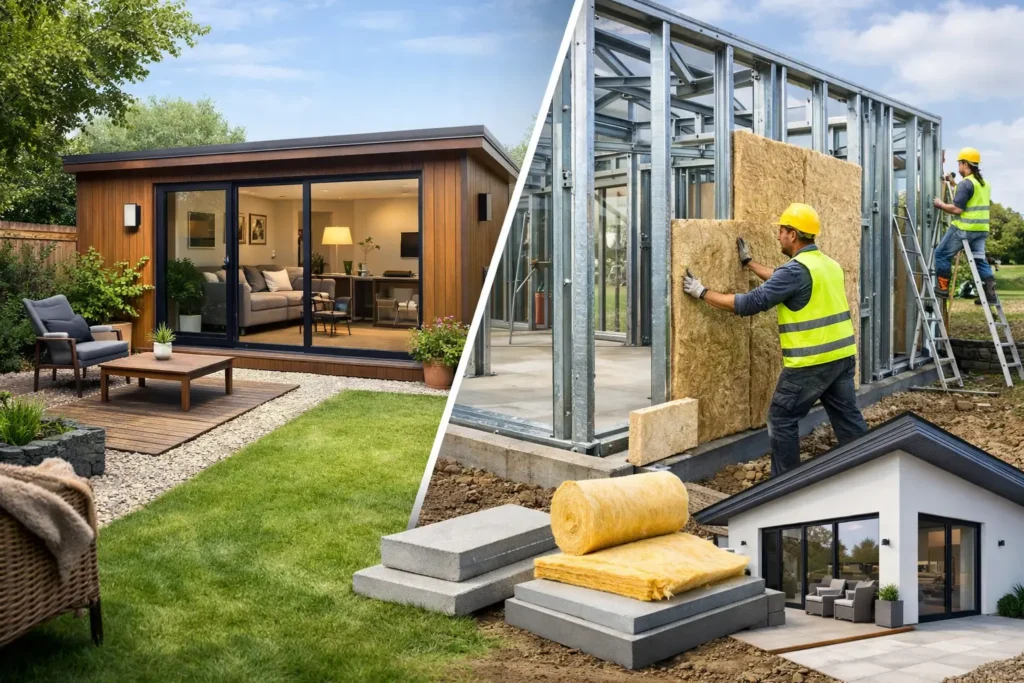
A high-performance steel-frame structure provides a precise, durable base for the home. The wall, roof and floor build-ups should be specified clearly, alongside the insulation strategy, windows, external doors and weatherproofing details.
Ask whether the quotation identifies the performance of the full thermal envelope rather than making a broad claim about insulation alone. Triple insulation and high-quality glazing can contribute to a more stable indoor temperature, but the final performance depends on the detailed design and installation.
The choice of external finish also affects cost and maintenance. Homeowners may prefer different cladding, render or roofing options, but each should be considered in terms of appearance, durability and suitability for the site rather than price alone.
Internal fit-out that supports real living
A permanent home needs more than an empty open-plan room. Include the cost of internal partitions, plasterboard and finishes, flooring, lighting, electrical points, internal doors, a kitchen, sanitaryware and fitted bathroom finishes.
This is often where an apparently lower quote becomes less clear. One provider may include a finished kitchen and bathroom, while another may allow only for first-fix services or leave final finishes to the homeowner. Neither approach is automatically wrong, but the difference must be reflected in the overall budget.
At A-Rated Houses, a turnkey approach is designed to make the scope easier to understand, from the steel-frame home and insulation through to internal finishes, kitchen, bathroom, heating, ventilation and connection-ready services. Specification levels can then be matched to the household’s priorities and budget.
Heating, hot water and ventilation
Energy-efficient homes need carefully planned heating and ventilation. The appropriate system depends on the fabric performance of the home, occupancy patterns, available services and the homeowner’s preference for upfront cost versus longer-term running costs.
Renewable heating, solar panels and battery storage can be worthwhile options for some properties. They can increase the initial investment, however, and their suitability should be assessed in the context of the site, anticipated electricity use and the wider system design. It is sensible to request a clear explanation of what each option is expected to do, rather than assuming a particular technology is right for every project.
Ventilation deserves equal attention. A well-insulated, airtight home needs an effective ventilation strategy to support indoor air quality and help manage moisture created by showering, cooking and everyday living.
Groundworks, access and utility connections
Ground conditions can have a significant effect on the final cost. Site clearance, excavation, foundations, drainage, retaining work and access for deliveries all need to be assessed before a firm project budget can be set.
Connection requirements also vary. Electricity, water, wastewater, broadband and heating arrangements may involve work between the existing dwelling and the new home. The distance involved, the condition and capacity of existing services, and any necessary upgrades can all affect cost.
This is why a site assessment is valuable. It identifies constraints early, reducing the risk that essential work appears as an unexpected extra later in the build.
Planning and Building Regulations are part of the budget
For a 45 m² home on a residential property, some projects may qualify for a planning exemption, subject to all applicable conditions. This should be checked for the individual site and proposed use. A planning exemption is not a blanket entitlement, and planning permission may be required in some circumstances.
The budget should also account for meeting applicable Irish Building Regulations. Compliance affects the structure, insulation, fire safety, drainage, ventilation and building services. It is not an optional upgrade to consider after the home has been designed.
This is a practical reason to choose a residential construction approach from the beginning. Designing for permanent occupation can help avoid the false economy of adapting an unsuitable structure later, when changes are usually more disruptive and expensive.
How to compare quotations fairly
Before choosing a supplier, ask each provider to set out the project in the same level of detail. A short quotation with a single total may be difficult to evaluate. A useful proposal should make clear what is included, what is excluded and what remains subject to site conditions or homeowner choice.
Look closely at the foundations, wall and roof specification, glazing, heating, ventilation, kitchen, bathroom, electrical installation, plumbing, finishes and utility connections. Also ask who manages design coordination, certification requirements, delivery logistics and final handover.
The most affordable option is not always the lowest initial number. A higher-quality thermal envelope, dependable windows and carefully designed services may cost more at the outset, while helping to support comfort and more predictable energy use over the life of the home. Equally, premium options should be chosen because they meet a real household need, not because they sound impressive on a specification sheet.
Budget for the life you want the home to support
The best way to assess cost is to start with the outcome. Independent accommodation for a parent may need accessible layouts and a highly comfortable heating approach. A home for an adult child may prioritise privacy, storage and a complete kitchen. A property owner considering qualifying rental accommodation needs to understand the practical, regulatory and tax requirements before making assumptions about income. Rent-a-Room Relief may allow qualifying rental income of up to €14,000 per year, subject to the scheme’s conditions.
Those decisions shape the specification. They also make it easier to distinguish between a short-term purchase and a permanent home that can serve a family well for years.
Request a detailed brochure and price guide, then use it as a starting point for a site-specific conversation. A clear scope, honest allowances and a home designed for year-round living will give you a far better basis for deciding what represents value.
